Resource: We have a popular interactive Guelph Neighbourhoods Map that shows neighbourhood performance, information and available listings by area. You can find it here:
One of the things that makes Guelph unique is that no two neighbourhoods feel the same. From downtown Guelph century homes downtown to modern builds in the south end, the city’s architecture tells the story of its growth over almost two centuries (Guelph will celebrate its 200th birthday in 2027!).
One of the starting points for conversation with clients that are new to Guelph is “what type of homes do you like?”. The answer to this question will give a shortlist of areas and help us better understand your goals and preferences.
Here’s a look at the most common home styles and where you’ll find them.
1850s–1910s: Gothic Revival, Italianate, and Queen Anne designs
In the early days of Guelph homes, many designs were made from local limestone, especially those from the 1850’s. These homes were built during Guelph’s early growth and are some of the city’s most recognizable properties. As a result, you’ll find great examples of these on some of the downtown streets such as Liverpool, Woolwich and Water St.
Brick homes of this era are often red brick, yellow brick or a combination of the two. Many of these are bungalows, considered to be “Ontario cottage” style. You can find examples of Ontario cottages on Woolwich St and some of the Exhibition Park and St Georges Park inner streets.
Unlike Toronto, Guelph doesn’t have significant inventory of heritage homes built in the late 1800’s. These Victorian designs are often semi detached (side-by-side) homes. Therefore, Guelph skipped right ahead to the common Edwardian design that is often found in “four square” style homes. As a result, Guelph has plenty of inventory built between 1900-1925 fitting this style. These are a simple, boxy, two-story footprint with a classic square or rectangular plan. The name “four square” comes from the house being 4 main rooms on the main level: entry, living room, dining room, kitchen.
Common Features
- Red brick and/ or yellow brick and limestone construction
- High ceilings
- Decorative trim and mouldings
- Covered front porches
- Tall windows
- Large mature lots
Where You’ll Find These types of Houses:
- Downtown Guelph (examples Liverpool St)
- St. George’s Park (examples Queen St)
- The Ward (examples York Rd)
- Exhibition Park (examples London Rd)
- General Hospital area (examples Arthur St N)
These homes appeal to buyers looking for character, walkability, and mature trees.
1920s–1940s: Craftsman and Pre-War Homes
As Guelph expanded, homes became smaller and more practical. All of this, while still retaining plenty of charm. Depending on when during this period a home was built, it could be a variety of different materials. Firstly, you will likely find brick into the 20’s and 30’s. Then, you’ll find examples built during WWII that were wood framed structures.
Common Features
- Brick, stucco and even some wood framed exteriors
- Hardwood floors
- Arched doorways
- Built-in cabinetry
- Detached garages
Where You’ll Find Them
- Exhibition Park (examples Central St)
- The Ward (examples Toronto St)
- General Hospital neighbourhood (examples Derry St)
- St Georges Park (examples Stuart St for brick and Dunkirk St for wood frame)
- Downtown Guelph (examples Harrison St)
Many of these homes have been renovated while maintaining their original character. As a result, you get a wonderful street scape that reflects updates over time.
1950s–1960s: Bungalows and Mid-Century Homes
Often considered the “Golden Age” of home construction, Guelph has ample supply of these types of homes. Post-war growth brought subdivisions filled with practical family homes in many areas of Guelph.
What used to be farm fields outside of the older areas were developed into lots that are commonly found to be 50′ x 100′.
Common Features
- One-storey bungalows made of yellow or red brick with heatherstone detailing
- Large lots, now considered “standard lots” at 50’w x 100d”
- Picture windows
- Large basements that were typically finished as rec rooms, bedrooms, or additional living space
- Attached or detached garages
Where You’ll Find Them
- Riverside Park neighbourhood (examples are Clive, Kensington Sts)
- Eastern parts of St Georges Park (examples Ryan Ave, Bennett)
- Northern and western parts of Exhibition Park (examples Campion, Glenwood)
- Old University neighbourhood (examples Forest Hill and Dean)
- Onward Willow (examples Alma and Bagot)
These homes remain popular with downsizers and families seeking mature neighbourhoods. They’re also popular with first time buyers due to the pricepoints. Additionally they’re popular with investors due to the ability to make secondary units from the basement.

Mid 1960s–1980s: Traditional Two-Storey Homes
Many of Guelph’s neighbourhoods grew during this period. As suburban living became more common, many families in the GTA chose Guelph as their home. As a result new builds boomed, which further resulted in new neighbourhoods that were simply farmfields before.
Guelph grew in all directions during this period with a variety of home designs including sidesplits (mainly 1960’s/70’s), two storey homes and bungalows.
This is also the era that many townhouses were built in Guelph offering more affordable pricepoints. The density of these developments meant more people in less space to maximize development space.
Common Features
- Two-storey layouts
- Brick fronts with aluminum siding
- Larger family rooms
- Wood-burning fireplaces
- Attached garages
- Pools
Where You’ll Find Houses from this era:
- West Guelph homes
- East Guelph (Auden Rd, Hadati,
- Old University/ Dovercliffe Park (examples on Carnaby and Woodland Glen)
- Kortright West (Hickory St, Oak St)
- Victoria North (Country Club)
These neighbourhoods offer a balance between mature trees and modern floor plans.
Where You’ll Find townhouses from this era:
- West Guelph (539 Willow, 45 Marksam, 700 Paisley)
- East Guelph neighbourhood (26 Hadati)
- Dovercliffe Park (Dovercliffe Rd)
1990s–2000s: Open-Concept Family Homes
Rapid growth during the 1990s and early 2000s created many of the neighbourhoods families recognize today.
Common Features
- Detached two-storey homes
- Semi-detached homes
- Open kitchens
- Ensuite bathrooms
- Double garages
Where You’ll Find Them
- Kortright East
- Kortright Hills
- Pineridge/ Westminster Woods
- Clairfields
- Village by the Arboretum (55+ community)
These neighbourhoods are especially popular with growing families because of their schools, parks, and trails.
2010s–Today: Modern Homes and New Communities
South Guelph has seen much of the city’s recent development. Although, you will still find some in East Guelph, North Guelph and West Guelph. They are the furthest edges in each direction of Guelph.
Common Features
- Mostly detached homes
- Open-concept layouts
- Large islands and walk-in pantries
- Nine-foot ceilings
- Energy-efficient construction
- Contemporary exteriors
Where You’ll Find Them
- South End
- Clair-Maltby area
- Westminster Woods
- Victoria North
These communities attract buyers seeking newer homes and easy access to Highway 401.
Condominium Architecture
Guelph also offers a wide variety of condo styles:
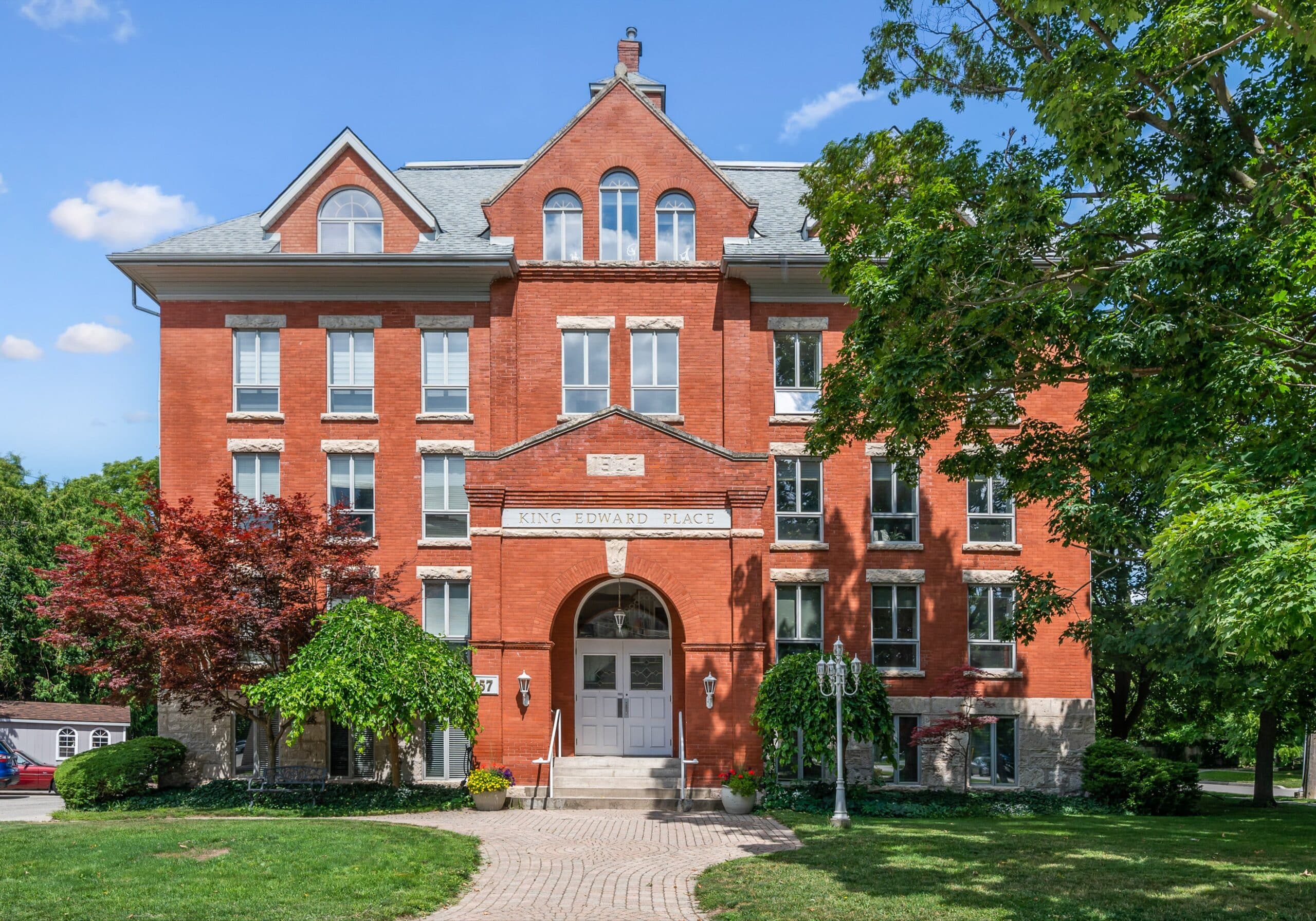
Historic Lofts
Examples include converted factories and warehouses downtown featuring:
- Exposed brick
- High ceilings
- Industrial finishes
You can find these type of properties at 60 Cardigan St (Stewart Mill Lofts), 57 Suffolk (King Edward Place), 40 Northumberland and the Lens Mill Lofts at 126 Ontario St.
1970s–2000s Apartment Buildings
Typically found around Riverside Park and the north end, offering larger units and mature surroundings. As a result, examples of these are on Marilyn Drive, Woodlawn Rd, downtown Guelph and a few other locations.
Modern Condos
Mostly concentrated in the south end, with contemporary finishes and amenities. As an example, you’ll also find that the MetalWorks downtown has a variety of designs (it was developed over 4 phases/ 10 years). Other exampels are 71 Wyndham, 150 Wellington and the Alice Block at 120 Huron St in the Ward.
Which Guelph Neighbourhood Is Right for You?
Whether you’re looking for a Victorian century home, a mid-century bungalow, or a newer family home, Guelph offers architectural styles that suit almost every lifestyle and budget.
Understanding the age and character of each neighbourhood can help buyers narrow their search and find a home that fits their needs.
Thinking about moving to Guelph? If so, and want help finding the right neighbourhood, we’d be happy to help! Get in touch with us here
Related links